

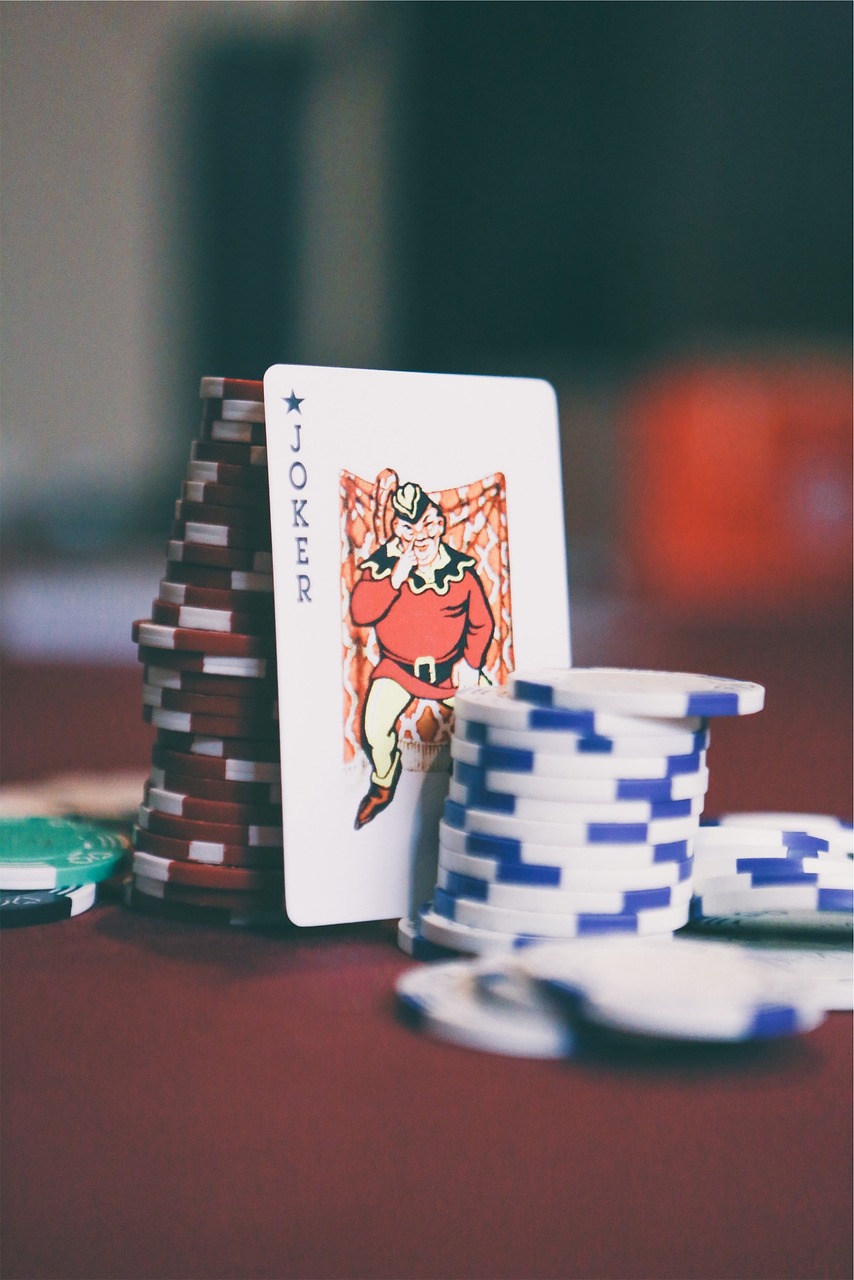
The Real Difference Between Winning and Losing at Online Casinos
Most casino players never stop to ask why they lose. They blame bad luck, rigged software, or a cold streak that just won't break. Meanwhile, the players who actually come out ahead — or at least lose far more slowly — understand something the rest never bother to learn: the house edge isn't just a number in the terms and conditions. It's a measurable force that grinds against you every single spin, hand, and bet. The good news? Once you understand it, you can stop playing like the house wants you to.
The House Edge Is Not a Myth — It's Math
Every casino game has a built-in mathematical advantage for the operator. This isn't a conspiracy; it's how the business survives. A roulette wheel with a single zero (European roulette) carries a house edge of 2.7%. Add the American double zero and it jumps to 5.26% — nearly double. Over a thousand $10 bets, that difference is roughly $270 versus $526 in expected losses. That's not bad luck. That's the game working exactly as designed.
Slots are trickier to judge because the edge is baked into the paytable and the RNG payout percentages. A slot with a 96% RTP returns, on average, $96 for every $100 wagered. A slot at 92% returns $8 less per $100. On a $2 spin every 3 seconds, that gap adds up fast — around $192 versus $96 per hour of play, assuming no jackpots hit. The variance hides it in the short term, but the math never blinks.
This is why the sharpest players obsess over RTP and volatility before they ever load a game. They're not looking for a guaranteed win. They're looking for games that give them the longest possible window to hit a real payout.
Where Players Actually Sabotage Themselves
The house edge is unavoidable. But plenty of players double it without realizing, through habits that feel harmless in the moment:
- Chasing bonuses without reading the wagering requirements. A 100% match bonus with a 40x wagering requirement on slots means you must bet $4,000 to clear $100 of bonus. If the slot RTP is 95%, you'll lose around $200 doing it — more than the bonus is worth. The bonus isn't free money. It's a contract.
- Playing side bets with terrible edges. The Pair Plus bet in Three Card Poker has a house edge around 7.28%. The 6/5 blackjack payout — increasingly common at lower-stakes tables — raises the house edge from 0.5% to roughly 1.4%. Players take these bets because they're exciting. Casinos offer them because they're profitable.
- Believing in "due" numbers. A slot that hasn't paid in 200 spins isn't warming up. Each spin is independent. The RNG doesn't track your patience.
- Using betting systems like Martingale. Doubling after every loss feels like a guaranteed recovery until you hit a 10-loss streak and need $5,120 to chase a $10 starting bet. Table limits and bankrolls exist precisely to end this fantasy.
The players who lose slowest aren't luckier. They've simply stopped paying for entertainment they don't actually want. This is explained well on kingfun.gb.net.
What Serious Players Do Differently
Walk into any poker room and you'll notice a certain type of player: quiet, patient, occasionally folding premium-looking hands. Online, these players embody the same discipline. They set stop-loss and stop-win limits before logging in. They treat their bankroll as a tool, not a scoreboard. A common rule among cash-game poker regulars is to never buy in for more than 5% of their total bankroll in a single session. That's not conservatism — it's survival.
In sports betting, the equivalent discipline is line shopping and unit sizing. A bettor who consistently places 1–2% of their bankroll per wager and hunts for the best available odds on each side will outlast the impulsive bettor who fires 10% on a Monday night parlay. Over 500 bets, a two-point difference in odds is worth more than any hot tip.
Betting exchanges take this further. On an exchange, you're not betting against the house — you're betting against other players, and the platform takes a commission of 2–5% on net winnings. For sharp bettors, that's often a smaller edge to beat than the 4.5% a traditional sportsbook builds into its lines.
The Variance Trap: Why Short-Term Results Lie
Here's the cruelest part of gambling mathematics: variance means you can play perfectly for a month and still lose. A 97% RTP slot can pay out 200% of your wagers in an hour and drain you dry over a week. A winning sports bettor can go 30 bets without a profit and doubt every decision they've made.
This is why bankroll management matters more than game selection. Two players with identical skill and identical games will have wildly different outcomes if one flat-bets 1% and the other swings 15% per wager. The first player might survive a 20-buy-in downswing. The second player is gone in three sessions and never gets to find out whether their strategy works.
The same principle applies in slot play. If you buy into a slot session for $100 on a high-volatility game, you might hit a 500x win — or you might lose it all in 50 spins. Understanding a game's volatility profile before you spin tells you whether your session should last 20 minutes or two hours. It won't change the RTP. It will change how long you stay in the game.
The One Habit That Actually Separates Winners
After all the talk of edges, RTP, and variance, the single most useful habit any iGaming player can develop is keeping a simple log. Not a spreadsheet with fifty columns — just the date, the game, the amount wagered, and the result. Do that for two months and you'll see patterns no gut feeling can reveal. You might discover that 80% of your losses come from three high-volatility slots you play when you're bored. You might notice you're profitable on live blackjack but steadily bleeding on side bets.
This isn't about becoming a professional. It's about turning a foggy experience into a clear one. The players who consistently enjoy gambling — and lose far less over time — are the ones who treat it as a cost of entertainment, not a path to income. They know exactly what the house edge is costing them, and they've decided that's a price worth paying for the thrill.
The house always wins in the long run. But within that run, how much you lose, how long you play, and how much you enjoy it are all decisions you control. The moment you understand the math, the game changes — not because it becomes beatable, but because it stops being mysterious. And a player who isn't mystified is a player who isn't easily manipulated.


Hill Walks
-
Cloud caps, wind shifts, and sudden temperature drops can signal changing conditions; learn to spot them early.


Wild Camping




-

Long established fact that a reader will be distracted
-

Long established fact that a reader will be distracted
-

Long established fact that a reader will be distracted




Long Distance
Karla Gleichauf
12 May 2017 at 05:28 pm
On the other hand, we denounce with righteous indignation and dislike men who are so beguiled and demoralized by the charms of pleasure of the moment
M Shyamalan
12 May 2017 at 05:28 pm
On the other hand, we denounce with righteous indignation and dislike men who are so beguiled and demoralized by the charms of pleasure of the moment
Liz Montano
12 May 2017 at 05:28 pm
On the other hand, we denounce with righteous indignation and dislike men who are so beguiled and demoralized by the charms of pleasure of the moment