

Identifying Common Mountain Birds by Song
Why the hills sound different
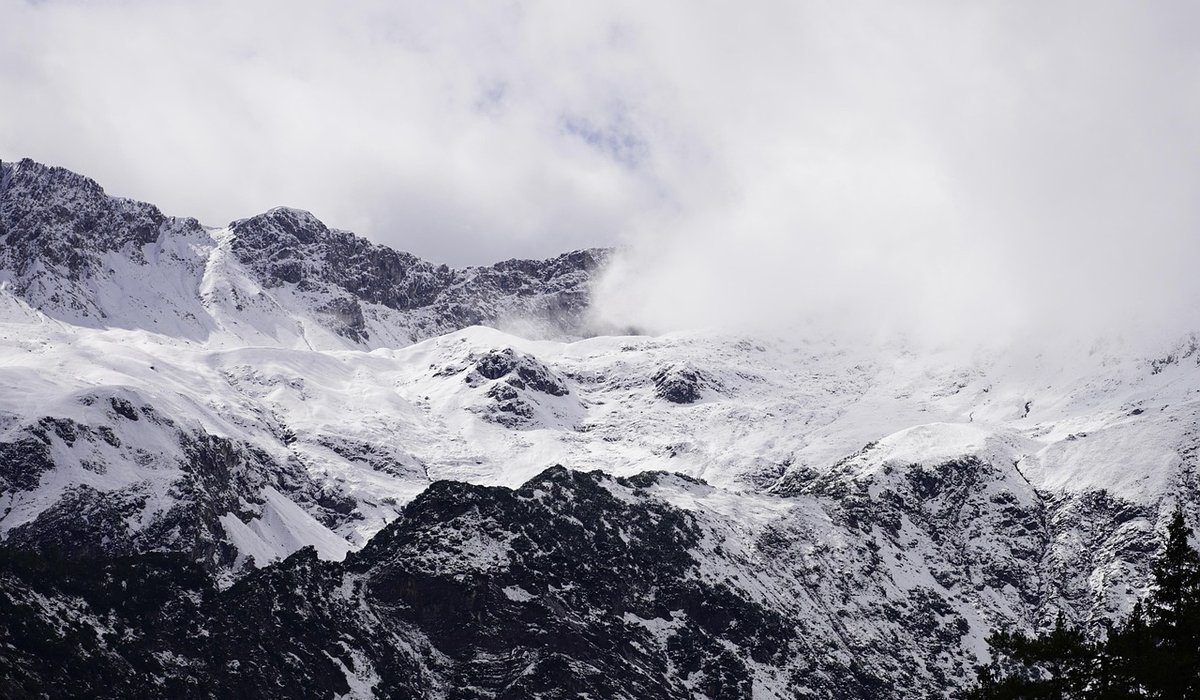
Walking a Scottish glen is as much a listening exercise as a looking one. Cloud can sit on the tops, mist can fill the corries, and the birds you most want to see are often small, brown and hiding in heather. But they cannot hide their voices. Learn three calls — meadow pipit, skylark and raven — and a quiet walk becomes a conversation. You will know when you are on open moor, when you are near crags, and when the season is turning. It costs nothing, needs no binoculars, and works even when your hands are cold and your hood is up.
The meadow pipit: the hill's metronome
The meadow pipit is the bird you will hear most often and notice least. It is a streaky brown thing, about the size of a sparrow, and it seems to be everywhere: on fence posts, on boulders, on the edge of a bog. Its flight call is a sharp, thin “sip sip” or “tsip”, often given as it flushes from the grass ahead of you. That call is your baseline. Once you can pick it out, you can stop wondering what the constant ticking is.
Its song is just as useful. The pipit rises a few metres, then parachutes down with a brief, descending “tseea-tseea-tseea”. It is not a long performance. It lasts a few seconds, then the bird drops back into the heather. Listen for the parachute: a small bird fluttering down as if on a string, singing a short phrase that falls in pitch. In a wild camp, you will hear this at first light, often before you hear anything else.
The skylark: a song that falls from the sky
The skylark is the opposite. It sings for minutes at a time, rising steadily until it is a speck, then hovering and pouring out a continuous, warbling torrent. The sound is often written as “tirra lirra”, but it is more than that: a stream of trills, whistles and mimicry, delivered without a pause. You will hear it over open moorland, machair and hill grazing, not over dense woodland or improved ryegrass. It is a song of space.
Distinguishing it from the meadow pipit is straightforward once you have heard both. The pipit's song is short, descending and delivered low. The skylark's song is long, ascending and delivered high. The pipit parachutes; the skylark hovers. If you are lying in a tent at dawn and the song seems to go on forever, it is a skylark. If it stops after three seconds, it is a pipit. Skylarks are in decline across the UK, so hearing one is always a small event, even when it is too high to see.
The raven: the voice of the crags
Ravens are the sound of the glen's bones. Their call is a deep, resonant “pruk pruk” or “kronk”, far lower and more guttural than the carrion crow's harsh “caa”. They often call in pairs, tumbling and rolling in the air above a ridge. If you hear a deep croak overhead, look up: a raven's tail is wedge-shaped, its wings are long and fingered, and it will often be doing something acrobatic — a half-roll, a dive, a chase.
Ravens also have a wider vocabulary than most people realise: knocking clicks, bell-like notes, and a soft “toc toc” around a nest site. But the deep croak is the one to learn. It carries for miles in a quiet glen. In mist, it tells you where the crags are. At a wild camp, it tells you that you are not alone, and that the hill has been busy for centuries.
Building your ear: practical drills for the walk in
You do not need to become a sound engineer. You need repetition. Before you go, listen to recordings of these three species on a birdsong app or a field guide with audio — download them while you still have signal. Then use the walk in as a lesson.
- Stop for five minutes at the first bit of open ground. Stand still, cup your ears, and count how many different calls you can hear. Do not try to identify everything. Just notice rhythm, pitch and repetition.
- Attach a mnemonic to each call. The pipit's sip sip is a dripping tap. The skylark's tirra lirra is a cracked bell that will not stop. The raven's pruk pruk is a stone dropped into a deep pool.
- Test yourself at dusk and dawn. Wild camping gives you front-row seats. Sit outside the tent with a brew and listen. The same three calls will anchor everything else.
- Record a voice note on your phone when you hear something new. Describe it out loud: “high, thin, three notes, descending”. You will remember it better than a photograph.
What else you might hear — and why it matters
Once you know the big three, other calls stand out like friends in a crowd. The wheatear's “chack chack” is a flash of white rump on a stone. The ptarmigan's dry croak belongs to the high tops. The ring ouzel's melancholy, fluting song is a treat in a steep-sided glen. The curlew's bubbling call is the sound of a moor at dawn. None of these are hard to learn once your ear is tuned.
There is a practical side, too. Ground-nesting birds like skylark and meadow pipit are vulnerable to disturbance. If you hear alarm calls — a pipit's sharp sip sip becoming frantic, a skylark lifting off and circling — you are probably near a nest. Move on quietly, keep your camp low-impact and away from open nesting habitat, and give the birds space. Learning their voices is not just an enrichment; it is a skill for walking lightly. And on a quiet hill, with the mist down and the map wet, a raven's croak or a skylark's song can be the best company you will have all day.


Hill Walks
-
Always regularly check locks, replace tips, and clean mud from sections to keep poles reliable on steep descents.
Wild Camping



-

Long established fact that a reader will be distracted
-

Long established fact that a reader will be distracted
-

Long established fact that a reader will be distracted




Long Distance
Karla Gleichauf
12 May 2017 at 05:28 pm
On the other hand, we denounce with righteous indignation and dislike men who are so beguiled and demoralized by the charms of pleasure of the moment
M Shyamalan
12 May 2017 at 05:28 pm
On the other hand, we denounce with righteous indignation and dislike men who are so beguiled and demoralized by the charms of pleasure of the moment
Liz Montano
12 May 2017 at 05:28 pm
On the other hand, we denounce with righteous indignation and dislike men who are so beguiled and demoralized by the charms of pleasure of the moment