

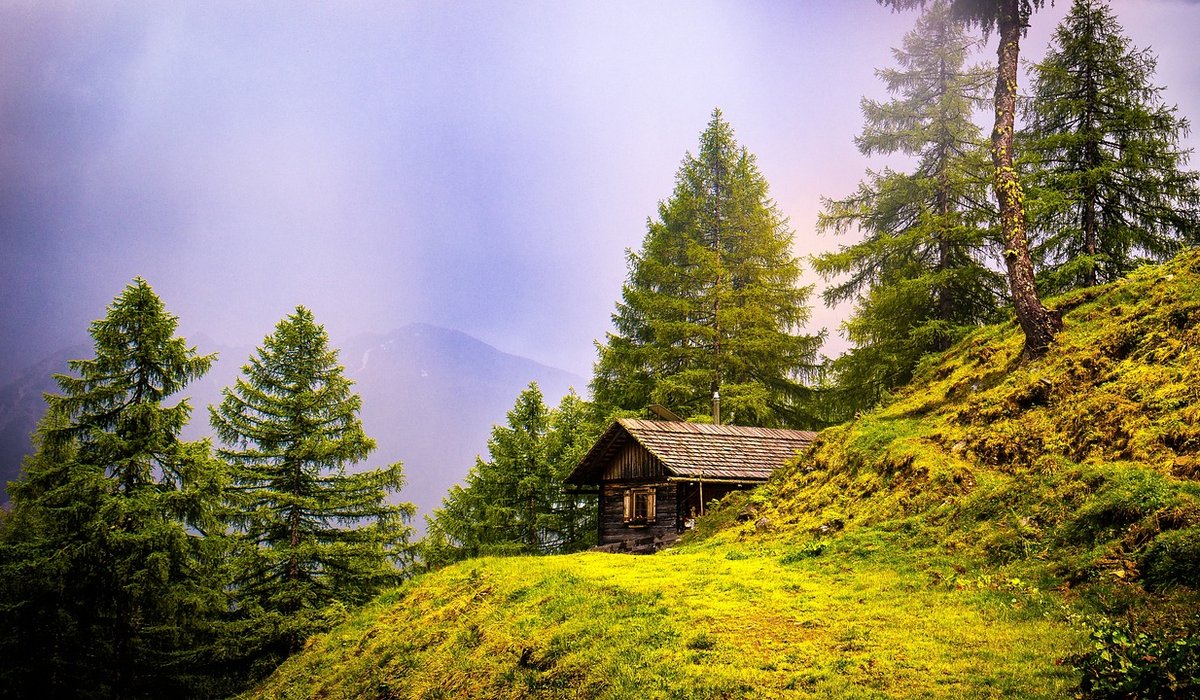
Navigation Skills for Pathless Scottish Glens
Scottish glens have a way of swallowing paths. One moment you’re on a clear track, the next it’s a faint smudge in the heather, then nothing but open hillside. That’s when navigation becomes the skill that gets you home. Whether you’re wild camping by a hidden lochan or linking Corbetts across a pathless plateau, reading contour lines, taking bearings, using natural features, and keeping your head in mist is essential.
Read the land before you leave the car
Good navigation starts at the kitchen table. Spread out your map and look beyond the path. Where does the ridge run? Which way do the burns flow? Are there obvious handrails—a long spur, a broken fence, a stream leading to a confluence? Mark them with a pencil. A pathless glen is not featureless; it’s just that the features are contours, streams, and boulders. Ten minutes studying the shape of the land will give you far more confidence.
Contour lines are your conversation with the hill
Contour lines are the most honest feature on any map. Learn to see them as three-dimensional shapes. A 10-metre contour interval means each line is a step of 10 metres. Tightly packed lines mean steep ground; widely spaced lines mean gentle slopes.
- V-shaped contours pointing uphill indicate a stream or re-entrant.
- U-shaped contours suggest a valley.
- Concentric rings are a summit or knoll.
- Spurs stick out like fingers; re-entrants bite into the hillside.
When the path fades, navigate by contour shapes. Count lines to measure climbing. Follow a contour around a hillside to stay at the same height. If you’re on a spur but the contours say re-entrant, you’ve drifted. Stop, check, correct.
Bearings: when the compass is your only path
When the path vanishes, a bearing becomes a promise. Set your map to north, then take a bearing from your position to a feature you can identify—a lochan, a cairn, a bend in a stream. Hold the compass flat at chest height and turn until the needle aligns with the orienting arrow. Walk on that bearing, but don’t stare at the compass. Pick a distant object on the bearing and walk to it, then take a new bearing. In poor visibility, use pacing and timing. Count your paces for 100 metres on flat ground, then adjust for uphill or rough terrain. Aim off—deliberately aim left or right of your target so you know which way to turn when you hit a catching feature. Always take a back bearing to check you’re on line.
Natural features as handrails and catching features
Pathless glens are full of natural handrails. A handrail is a linear feature you can follow—a stream, a ridge, a boulder field, a broken fence. If you’re following a burn upstream, you can’t get lost as long as you stay with it. A catching feature is something that stops you—a loch, a confluence, a steep crag, a track. Aim for one that runs across your direction of travel, so if you overshoot, you know. For example, heading for a col, aim for the stream that runs down from it. When you hit the stream, turn uphill. Natural features also confirm your position. If the map shows a spur and you’re on a spur, you’re probably right. If the ground doesn’t match, trust the map and compass, not your memory.
When the mist rolls in: pacing, timing, and trust
Mist is a Scottish speciality. It can arrive in minutes, turning a clear glen into a grey void. Navigation in mist is about discipline. First, stop. Put on your waterproofs, eat something, take stock. Use your compass and map to fix your position. If you can’t, use your last known point and direction of travel. Pace counting becomes critical. Count every 100 metres. Use a timer as backup—at 3 kilometres per hour, you cover 100 metres in two minutes. An altimeter helps confirm height, but don’t rely on it alone. Sound and feel matter: the sound of a stream, the slope of the land. If unsure, don’t keep walking. Stop, shelter, wait. Mist often lifts. If you must move, use a bearing and pace count to a known catching feature. Trust your compass. It doesn’t lie.
Wild camping skills that keep you found
Wild camping in a pathless glen means you’re often far from help. That’s the joy, but it’s also the risk. Pitch your tent before the mist comes down, not after. Choose a spot that’s flat, dry, and sheltered, and note the features around you—a boulder, a stream junction, a distinctive crag. Before you sleep, take a bearing to your exit route and write it down. Leave a route card with someone at home. Practise night navigation in a familiar area so darkness and mist don’t catch you out. And remember: the best navigation skill is knowing when to turn back. A pathless glen will still be there next year.


Hill Walks
-
Focus on layers, waterproofs, socks, and a reliable stove to keep your pack light on long mountain days.

Wild Camping



-

Long established fact that a reader will be distracted
-

Long established fact that a reader will be distracted
-

Long established fact that a reader will be distracted




Long Distance
Karla Gleichauf
12 May 2017 at 05:28 pm
On the other hand, we denounce with righteous indignation and dislike men who are so beguiled and demoralized by the charms of pleasure of the moment
M Shyamalan
12 May 2017 at 05:28 pm
On the other hand, we denounce with righteous indignation and dislike men who are so beguiled and demoralized by the charms of pleasure of the moment
Liz Montano
12 May 2017 at 05:28 pm
On the other hand, we denounce with righteous indignation and dislike men who are so beguiled and demoralized by the charms of pleasure of the moment